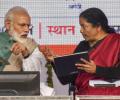
Between August and September Finance Minister Nirmala Sitharaman toured the length and breadth of India meeting traders, experts and entrepreneurs to gauge the pulse of the nation, reports Ruchika Chitravanshi.
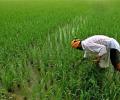
It has decided not to levy the 2 per cent tax deducted at source (TDS) on cash payments above Rs 1 crore made through Agricultural Produce Market Committees.

This should augur well for the rabi crops as delayed withdrawal will leave enough moisture in the soil for early sowing.

Farmers should be encouraged into crops needing less of water, while ensuring a market for what they sow, said ICAR's head.

The highest water-use efficiency of more than $ 50 per cubic metre is in Oceania, Australia, New Zealand, Singapore, Israel, Denmark, Finland, and Great Britain while the lowest is in Central and South Asia, including India, at less than $ 10 per cubic metre.

The subsidy will be credited to bank accounts of farmers against cane price dues and are compliant with WTO norms. This will benefit millions of farmers in Uttar Pradesh, Maharashtra and Karnataka.

A committee suggested that CSR expenditure be made tax deductible, in order to incentivise spending by companies. It also said that CSR should not be used as a means of resource-gap funding for government schemes.
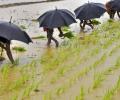
The slowdown in sowing is mainly because of the delayed onset of the southwest monsoon and its slow progress in June.
The current estimate, however, largely covers only the cost of infrastructure such as pipes, construction of borewells, overhead costs among others and not the expenditure to be incurred on operation and maintenance.
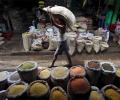
However, the areas under paddy - the biggest cereal grown during the kharif season - continue to be less than last year, mainly due to delayed onset of rains and also on account of shift towards the more lucrative maize.

Recent data from market analytics firm Nielsen shows that the rural market in the country's 630,000-odd villages is pulling down the overall FMCG business.
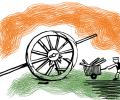
According to experts by making CSR spending mandatory, the government has made it into a statutory due like tax but with none of its democratic quality.
Officials said good rain in August - though it might not improve acreages much for most crops except urad, moong, and paddy - would help in improving yields in the crops already planted.
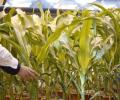
Low rain coupled with the fact that maize prices in the open market have surged from around Rs 15-16 a kg to almost Rs 25 this year have forced farmers to turn to this crop.
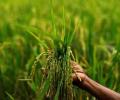
Till July 26, kharif crops have been sown in around 68.87 million hectares, which is 6.43 per cent lower than the area covered during the same period last year.
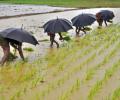
The high-level panel also asked the government to work towards re-orienting subsidies in a targeted manner from the crop sector to the non-crop sector and redesign the electronic National Agriculture Market.
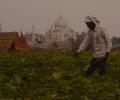
The groups, including those associated with the ruling Bharatiya Janata Party's parent organisation the Rashtriya Swayamsevak Sangh, have also threatened a big nationwide agitation if growth of illegal GM crops isn't checked.

Government suspects that many of these bank accounts were used to launder money, especially after the demonetisation in November 2016.
The committee has been tasked to come up with policy measures to boost agriculture exports, raise growth in food processing, attract investments in modern market infrastructure, value chains and logistics.
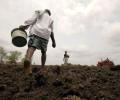
Till June 30, the southwest monsoon was 33 per cent lower than normal, which is among the worst in the last five years, with 28 of the 36 meteorological divisions recording deficient rain.
 © 2026 Rediff.com - Investor Information - Advertise with us - Disclaimer - Privacy Policy - Sitemap - Feedback - About us - Terms of use - Grievances